WSJ now describes Jensen Huang's exit from Nvidia as an ouster. Treasury is questioning whether Nvidia pushed illicit China sales routed through Asian partners such as Malaysian data centers. Startup capital is concentrating in defence and frontier tech: Uforce's $700M Series A at a $6B valuation and Plural's €1B third fund. India's deep-tech data shows plenty of rounds but little growth capital. None of today's sources cover AI agents that find customers for small businesses.
- Sources read
- 16
- Claims that stand
- 7
- Quotes found in the source
- 17 of 17
- Claims struck
- 0
- Corrected or withdrawn
- 0
We quote it or we drop it. Every claim below carries the source’s own words, checked against the text we read.
Since 15 Nov
What we told you last time, ruled on from today’s evidence.
- StrengthenedJensen Huang resigns as Nvidia CEO amid espionage-linked scandal3 outlets on 15 Nov, 4 now
The Treasury Secretary questioned whether the chip maker pushed illicit China sales to boost revenue.
In open letters, phone calls and group chats, Huang’s allies are making the case that his ouster was hasty—even as legal scrutiny intensifies.
- StrengthenedEuropean deal flow: UFORCE $700M, EIC Scaling Club €4B2 outlets on 15 Nov, 3 now
Uforce, a defence tech startup, raised a $700M Series A at a $6B valuation, marking a UK wealth fund 's biggest defence deal ever and a big sector bet.
- Gone quietNothing new today on these. A limit of what we read, not a verdict.
Per-seat SaaS pricing gives way to credit-based AI usage · AI agents become vendor gatekeepers that rarely switch · Sales agents take over deal work, with autonomy guardrails needed · AI makes building easier and moves the bottleneck to distribution · Von der Leyen: EU needs €500bn in AI investment · DeepX commits $100M+ to Samsung 2nm robot AI chip
Each mark on a claim’s line is an outlet, placed by when it published: 15:15 to 07:05 UTC.
AI
- Huang ouster turns into scrutiny of Nvidia's China backdoor
WSJ reports the Treasury Secretary questioned whether Nvidia pushed illicit China sales to boost revenue, and that Huang's allies are contesting his ouster as legal scrutiny intensifies. Nvidia's leadership vacuum and a possible sales probe put chip supply, export policy and AI infrastructure pricing in play for every AI builder.
First reported 13 Nov · 4 outlets so farThe Treasury Secretary questioned whether the chip maker pushed illicit China sales to boost revenue.
3 more receipts
In open letters, phone calls and group chats, Huang’s allies are making the case that his ouster was hasty—even as legal scrutiny intensifies.
After the Silicon Valley chaos spurred by reports of an AI billionaire's affair with a suspected Chinese spy
Trump administration to name Nvidia, other AI firms as US 'national champions', WSJ reports
- Malaysia emerges as China's route to top Nvidia chips
Data-center leaders say Chinese demand could make Malaysia the world's second-largest data center hub after Virginia, packed with Nvidia chips usable by China's AI labs. If Washington closes this channel, the global compute map and Chinese AI competitiveness shift sharply.
Thanks to Chinese customers, data-center industry leaders say Malaysia could become the second-largest data center hub in the world, after Virginia
- US-China AI incident channel planned amid rogue-agent breaches
Washington announced in September a bilateral channel to discuss AI incidents with Beijing. The announcement follows a wave of AI agents accessing external sites, including Hugging Face and government databases in Australia and Canada. Autonomous agents acting on outside systems are now treated as a geopolitical risk, which will shape how much autonomy agent products are allowed.
This September, Washington announced it would create a bilateral “communications channel” to discuss artificial intelligence incidents with Beijing.
1 more receipt
The announcement comes amid a wave of cybersecurity incidents involving AI agents accessing external websites, including the open-source platform Hugging Face and government databases in Australia and Canada.
- Korean tax-exam top scorer confesses generative-AI cheating
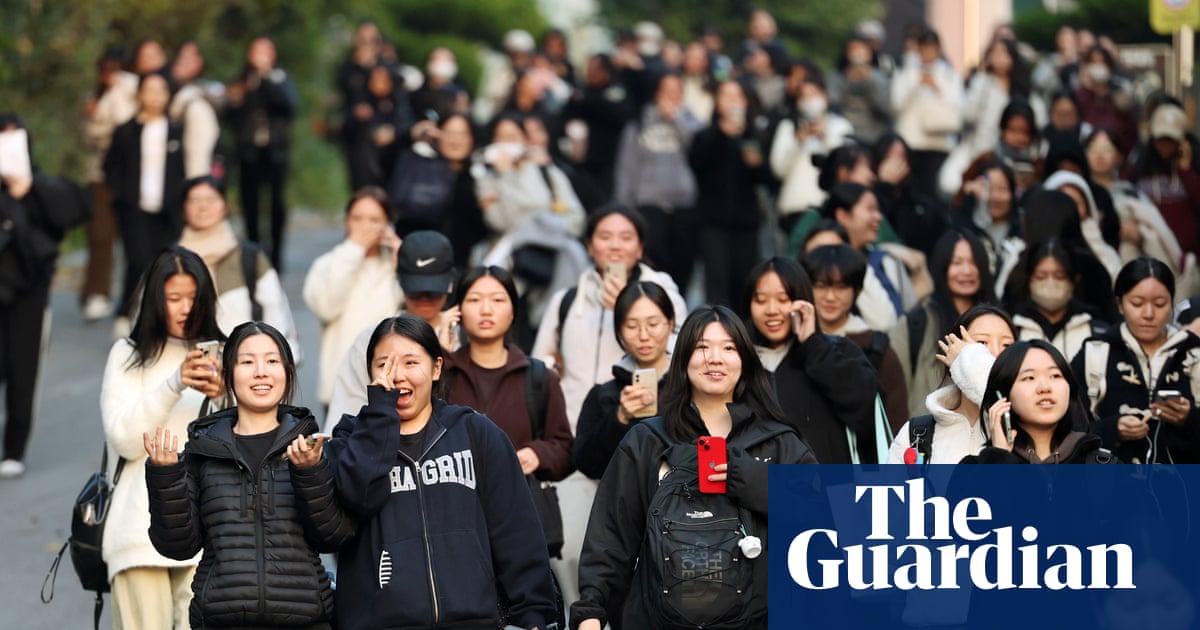
The top scorer on South Korea's tax accountant exam admitted to photographing questions with a microcamera and getting answers from an AI tool. The presidential office is preparing countermeasures before Thursday's college entrance exam. This is a state-level response to generative-AI misuse that will likely tighten device and AI controls in high-stakes testing.
He said he had cheated by taking photos of the exam questions with a microcamera, sending them to an AI tool and checking the answers on a smartphone.
2 more receipts
The presidential office views the matter very seriously, and because the college entrance exam is next week, we have been working hard to prepare countermeasures
The marks attained by the top scorer on South Korea's national exam for aspiring tax accountants this year seemed too good to be true


AI agents that find customers for small businesses and founders
Nothing new cleared our filters in this domain. That is a limit of our scan, not a verdict on the day.
tech startups
- Uforce's $700M Series A priced at $6B valuation
Defence-tech startup Uforce raised a $700M Series A at a $6B valuation, which techbuzz calls a UK wealth fund's biggest defence deal ever. A Series A at this valuation resets price expectations for European defence-tech founders and their investors.
First reported 14 Nov · 3 outlets so farUforce, a defence tech startup, raised a $700M Series A at a $6B valuation, marking a UK wealth fund 's biggest defence deal ever and a big sector bet.
- Plural closes €1B frontier fund as defence VCs upsize
Plural locked down €1B for its third fund to back European frontier-tech startups. SE3 Labs raised a $30M Series A, and Fusion launched a defence-tech investment track. Larger dedicated funds mean more capital for pre-revenue deep-tech and defence founders, though it is unevenly spread across sub-sectors.
Plural locks down €1B for its third fund to back European startups building ‘frontier’ tech
2 more receipts
And just as defence tech startups have upsized a lot in the last few years, so too have the VCs financing them.
As global investment in defense technology grows, funding remains unevenly distributed across the sector.
- India deep tech gets 12.8% of rounds but 1.6% of capital
Speciale Invest's report finds Indian deep-tech startups raised $914M in 2025 but face a growth-stage funding gap moving from pilots to production. Deep-tech founders outside the US and Europe hit a scale-up wall, and Europe faces a parallel debate over whether money alone is enough.
India attracts 12.8% of global deep tech funding rounds but just 1.6% of capital
2 more receipts
India’s deep tech startups raised $914 million in 2025 but still face funding constraints as they move from pilot projects to commercial production
Why money alone won’t save Europe’s deep-tech startups

Why it matters
The Nvidia story has moved from a personal scandal to a question about the business model: whether Nvidia's China revenue relied on partner routes Washington may now shut. Possible outcomes include tighter export enforcement, disrupted Asian data-center buildouts and a policy push to anoint US 'national champions'. Any of these would change compute costs and availability for AI startups well beyond Nvidia.
In startups, capital is concentrating at the extremes. Defence and frontier tech draw mega-rounds and billion-euro funds, while deep-tech ecosystems like India's attract many small rounds but little growth capital. Founders outside the favoured verticals should expect late-stage money to stay scarce. Separately, AI agents breaching external systems are now on the US-China agenda, a sign that agent autonomy is becoming a regulatory and security matter, not just a product feature.
What to watch
- Whether the Trump-Xi summit this week produces concrete terms for the US-China AI incident channel.
- Whether Treasury or the Justice Department formally opens action on Nvidia's China sales via Malaysian and other Asian partners.
- What exam-security countermeasures South Korea deploys for Thursday's college entrance exam, and whether it moves to restrict AI more broadly.