Jensen Huang has resigned as Nvidia CEO after reports tied him to a suspected Chinese intelligence asset, leaving the startup ecosystem Nvidia bankrolled without its chief patron. In go-to-market software, per-seat SaaS pricing is giving way to credit-based models, and AI agents are increasingly picking vendors and running sales tasks. European funding stays active, led by UFORCE's $700M defence round, as Brussels puts the continent's AI investment need at €500bn.
- Sources read
- 8
- Claims that stand
- 8
- Quotes found in the source
- 12 of 12
- Claims struck
- 0
- Corrected or withdrawn
- 0
We quote it or we drop it. Every claim below carries the source’s own words, checked against the text we read.
Since 14 Nov
What we told you last time, ruled on from today’s evidence.
- StrengthenedReport alleges Nvidia funded AI startups to buy its GPUs2 outlets on 14 Nov, 3 now
and on Thursday morning, the seismic news broke: Jensen Huang had resigned from his role as CEO.
His abrupt departure followed reports that U.S. intelligence agencies believed Huang had been involved with a woman who was working as a Chinese intelligence asset
- StrengthenedChina's AI-enabled one-person companies keep spreading6 outlets on 14 Nov, 7 now
HubSpot co-founder Dharmesh Shah discusses how AI is changing software development, making building easier but distribution more challenging.
- StrengthenedCEE deal flow: UFORCE's €630M round leads, Kardi AI raises €5.3M1 outlet on 14 Nov, 2 now
Defencetech UFORCE raises $700M, EIC Scaling Club companies raise €4B, and healthtech leads investment in October
This week, we tracked more than 60 tech funding deals worth over €2.3 billion and over 10 exits
- Gone quietNothing new today on these. A limit of what we read, not a verdict.
FAA ground stop sparks AI blame; ASI and Duffy deny SMART link · Fed survey: 87% now name AI as salient financial-system risk · HubSpot reinstates co-founder Halligan as CEO for an AI reset · Decagon reaches $4.5bn valuation on customer-facing AI agents · Anthropic IPO targets roughly $1.33 trillion valuation
Each mark on a claim’s line is an outlet, placed by when it published: 08:15 to 06:27 UTC.
AI
- Jensen Huang resigns as Nvidia CEO amid espionage-linked scandal
Huang resigned on Thursday after reports that U.S. intelligence believed he had been involved with a suspected Chinese intelligence asset tied to Megaspeed, a major Nvidia chip buyer; Nvidia's board has opened an independent investigation. Nvidia funded much of the AI startup and neocloud ecosystem, so founders who depend on its capital and chip allocation now face a patron in leadership limbo.
First reported 13 Nov · 3 outlets so farand on Thursday morning, the seismic news broke: Jensen Huang had resigned from his role as CEO.
2 more receipts
His abrupt departure followed reports that U.S. intelligence agencies believed Huang had been involved with a woman who was working as a Chinese intelligence asset
doling out alms to needy startups, AI labs, and neoclouds
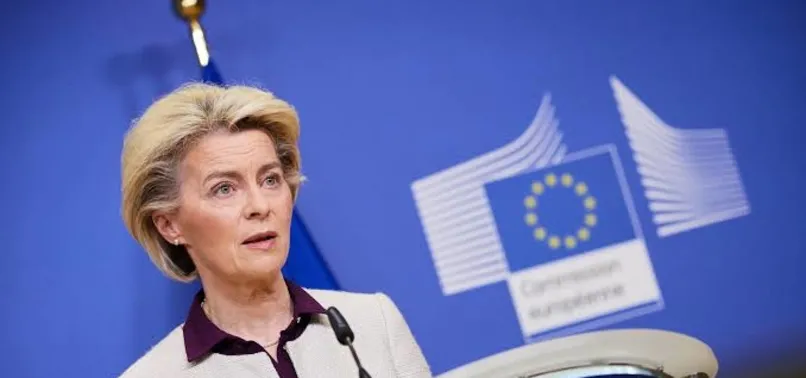
- Von der Leyen: EU needs €500bn in AI investment
The European Commission President said the EU needs €500 billion of AI investment, mainly in advanced models, chips and hardware. It signals the scale of public and private capital Brussels wants mobilised, a potential funding tailwind for European AI startups.
EU Commission President Ursula von der Leyen stated that €500 billion is needed for AI investments, primarily for advanced models, chips, and hardware

AI agents that find customers for small businesses and founders
- Per-seat SaaS pricing gives way to credit-based AI usage
Pricing specialist Ulrik Lehrskov-Schmidt says HubSpot has already tripled prices by moving to credit-based usage, and this hit existing customers. Small businesses buying AI-powered lead-generation and CRM tools should expect usage-based bills that can rise sharply, which changes the cost of customer acquisition.
companies like HubSpot have already tripled prices by moving to credit-based usage, impacting existing customers.
- AI agents become vendor gatekeepers that rarely switch
Lehrskov-Schmidt argues that AI agents now choose vendors and seldom switch once they have chosen, so the first selection carries outsized weight. For founders, this means winning discovery by buying agents early matters more than later churn-recovery tactics, because agent-made choices tend to stick.
This shift means that AI agents now act as gatekeepers, making initial vendor selection critical because they rarely switch.
- Sales agents take over deal work, with autonomy guardrails needed
Agents are being used to co-write deals, build custom competitive decks, price custom requests and handle procurement, while experts warn that too much autonomy risks unauthorised mass emailing of customer databases. Customer-finding agents can replace a lot of seller time, but a small business deploying one needs approval guardrails before it touches the customer list.
can co-write deals, generate custom decks with competitive analysis, price custom requests, and manage procurement details.
1 more receipt
excessive autonomy poses significant risks, such as an agent autonomously ordering unapproved items or emailing an entire customer database without proper authorization.

tech startups
- AI makes building easier and moves the bottleneck to distribution
HubSpot co-founder Dharmesh Shah says AI is making software easier to build but distribution harder, and Replit's agents complete projects for a fraction of the old cost. As building gets cheaper, customer acquisition becomes the scarce skill, which strengthens demand for agents that find customers.
First reported 10 Nov · 7 outlets so farHubSpot co-founder Dharmesh Shah discusses how AI is changing software development, making building easier but distribution more challenging.
- European deal flow: UFORCE $700M, EIC Scaling Club €4B
Tech.eu reports a $700M raise for defencetech UFORCE and €4B raised by EIC Scaling Club companies, and tracked more than 60 deals worth over €2.3 billion this week. Large European rounds are concentrating in defence and deeptech, which shows founders where late-stage capital is flowing.
First reported 14 Nov · 2 outlets so farDefencetech UFORCE raises $700M, EIC Scaling Club companies raise €4B, and healthtech leads investment in October
1 more receipt
This week, we tracked more than 60 tech funding deals worth over €2.3 billion and over 10 exits
- DeepX commits $100M+ to Samsung 2nm robot AI chip
South Korean startup DeepX plans to spend more than $100 million on a next-generation AI chip for robots, to be fabricated on Samsung's 2-nanometer process. A startup making a nine-figure bet on leading-edge silicon for robotics points to edge-AI hardware as a space where challengers are competing outside Nvidia's core.
DeepX, a South Korean startup, intends to commit upward of $100 million to a next-generation AI chip that will be fabricated on Samsung


Why it matters
Huang's resignation takes away the single most active patron of the AI startup economy at the moment the desk was already tracking claims that Nvidia's investments fed demand for its own chips. If Nvidia's next leadership pulls back on ecosystem financing, neoclouds and GPU-hungry startups lose an important source of capital and allocation priority. That would raise the value of alternative chips, such as DeepX's, and of public money like the EU's €500bn ambition.
In customer acquisition, the economics are shifting on two fronts at once. Tools are moving to credit-based pricing that can triple costs, and agents are becoming the buyers that pick vendors and rarely leave. With building now cheap, distribution is the moat. Small businesses and founders who get chosen first by agents, and who keep their own outbound agents under guardrails, will have the advantage.
What to watch
- Who Nvidia's board names as permanent CEO, and whether it keeps funding startups and neoclouds or scales that back.
- Whether other CRM and sales-tool vendors follow HubSpot's credit-based repricing, and how small-business customers respond.
- Whether the EU turns the €500bn AI figure into concrete funding instruments open to startups.
Sources read
| Source | Outlet | Published, UTC | Quoted |
|---|---|---|---|
| The downfall of AI’s $5.7 trillion man | 18:15 | 3× | |
| Mark Zuckerberg | Facebook Cofounder, Meta CEO, & AI | 05:15 | read, not quoted | |
| Cloudflare Inc. R (8CF.DE) Q4 FY2025 earnings call transcript | 13:15 | read, not quoted | |
| From bicycle crankshafts to satellites: Sunil Mittal's 50-year journey and his next big bet on AI | 06:27 | read, not quoted | |
| Per seat pricing is dead – this is the future of SAAS business | 08:15 | 5× | |
| Defencetech UFORCE raises $700M, EIC Scaling Club companies raise €4B, and healthtech leads investment in October | 15:15 | 2× | |
| EU needs AI investments worth €500bn, von der Leyen says | 19:15 | 1× | |
| Outage postmortems: 10 ways tech companies investigate | 15:15 | 1× |