Data center measures appeared 41 times on ballots in 10 states, and voters sided with the AI build-out once. Democratic governors-elect in Texas, Georgia and Ohio campaigned on data center regulation. OpenAI leaders reportedly discussed resetting next year's capacity expectations, while Apple and Goldman Sachs are cutting AI spend internally. In agent commerce, vendors are building checkout and identity tooling, but Uber reports almost no one books rides through agents.
- Sources read
- 20
- Claims that stand
- 7
- Quotes found in the source
- 19 of 19
- Claims struck
- 0
- Corrected or withdrawn
- 0
We quote it or we drop it. Every claim below carries the source’s own words, checked against the text we read.
Since 4 Nov
What we told you last time, ruled on from today’s evidence.
- Gone quietNothing new today on these. A limit of what we read, not a verdict.
Google makes Search access conditional on schools enabling AI · EU court adviser says Gemini's reuse of press content may breach copyright · Menlo: enterprise AI deployment spend hits $177B as agent traffic surges · Banks start packaging AI toolkits for small business customers · Solopreneurs use AI to grow before making a first hire · Freshworks crosses $1B ARR with 30% fewer employees · Privacy-focused AI home assistant Ollie shuts down under Big Tech pressure · African tech startups raised $684M in first nine months of 2026
Each mark on a claim’s line is an outlet, placed by when it published: 11:15 to 06:55 UTC.
AI
- Voters reject data center build-out in 40 of 41 ballot measures
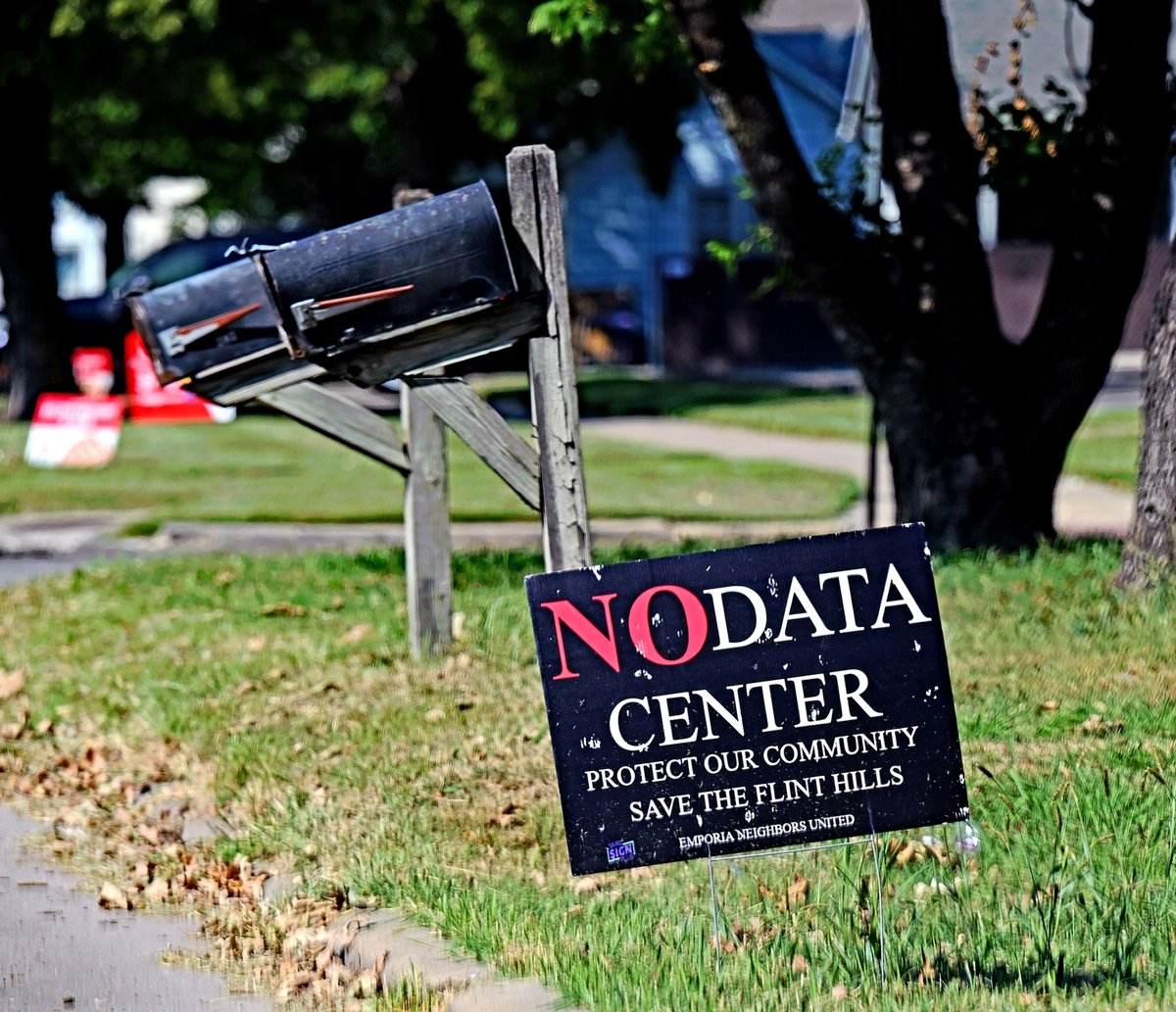
In Tuesday's elections, data center bans, moratoriums and rezonings appeared 41 times in 10 states, and the AI build-out won once, in Harwood, N.D.; OpenAI leaders then discussed resetting 2027 data center capacity expectations. Local permitting is now a binding constraint on AI compute, which feeds directly into model pricing, capacity and the growth assumptions behind AI startup valuations.
On Tuesday the artificial intelligence boom was on the ballot 41 times in 10 states. By Wednesday, with most results in, voters had sided with it just once.
3 more receipts
senior leaders at OpenAI were discussing whether the results meant the company would have to reset expectations regarding its data center capacity next year
Billionaire investors Bill Ackman, Chamath Palihapitiya and Brad Gerstner warned that Democratic opposition to data centers could threaten the artificial intelligence boom.
Wall Street rallied despite those concerns, with the Dow surging more than 1,500 points and Big Tech stocks adding more than $750 billion in market value
- New governors in Texas, Georgia, Ohio ran on data center regulation
Democratic governors-elect Hinojosa in Texas, Bottoms in Georgia and Acton in Ohio made data center regulation central to their campaigns, and Texas holds about a quarter of planned U.S. capacity. State-level rules in Texas could slow the national compute build-out far more than scattered local moratoriums.
Governors-elect Gina Hinojosa in Texas, Keisha Lance Bottoms in Georgia, and Amy Acton in Ohio—all Democrats—made data center regulation a key part of their campaigns.
2 more receipts
Texas is the big one, accounting for about a quarter of the U.S. data center capacity in the works, according to one recent analysis
The AI buildout has boosted the stock market, but that growth benefits a smaller, wealthier slice of Americans.
- Apple cuts employee AI token budgets as enterprises rein in spend
Bloomberg, via Reuters, reports that Apple reduced employee budgets for AI tokens to control costs, after Goldman Sachs restricted access to some AI coding tools. Large buyers are moving from unlimited AI usage to metered usage, which pressures AI vendors whose revenue depends on token consumption.
has reduced employee budgets for AI usage as part of a broader effort to rein in costs
1 more receipt
Bloomberg recently reported that Goldman Sachs restricted access to some AI coding tools following a review of productivity and risk management

AI agents that find customers for small businesses and founders
- Agent-commerce tooling ships, but Uber reports almost no agent bookings
Descope launched Envoy so consumer apps can accept personal AI agents as users, and $10B startup Instinct says users link credit cards quickly; Uber says only four people booked a ride via an AI agent in its busiest week last quarter. Founders being told to sell to AI agents should treat agent-driven demand as early and unproven, because real transaction volume is still close to zero.
Descope Inc. today launched Envoy, a service that lets consumer websites and apps accept personal artificial
3 more receipts
Instinct founder Noah Shinn says rapid credit card linking shows trust, as AI agent rivals like Meta's Muse and OpenAI's Dots chase shopping.
AI agents are increasingly handling purchasing decisions that humans used to make themselves.
During its busiest week last quarter, Uber said only four people booked a ride using an AI agent.
- Small businesses urged to test agents before granting autonomy
Guidance aimed at small business owners recommends testing AI agents on multi-step customer workflows, such as HVAC service requests, before giving them more independence; MarTech covers agents' growing role in customer experience. For small firms, the practical barrier to agents that handle customers is trust and testing, not raw capability.
For small business owners, a routine service request can set off several tasks.
1 more receipt
Paul Meinshausen, co-founder of Aampe and head of agentic at MoEngage, joins Conversations with MarTech to discuss the evolving role of AI agents in

tech startups
- Women TechEU Allies offers €12M in equity-free grants to 160 startups
The EU-backed Women TechEU Allies scheme gives about €75K each to 160 early-stage deep tech startups with women in top management roles, plus mentoring and a route to EIC support. Equity-free money of this size matters to deep tech founders when venture capital is concentrating in large AI rounds.
The programme targets early-stage deep tech startups founded or co-founded by women who hold a top management position, such as CEO or CTO.
2 more receipts
the scheme offers equity-free money, mentoring and a bridge to further EIC support.
Women TechEU Allies: 160 Startups, €12M Grants [2026] What €75,000 Buys a Software-Heavy Deep-Tech Startup
- Startups face a flood of AI-written job applications
Sifted reports that startups want AI-literate hires but are being swamped by AI-generated CVs and cover letters, and are changing their hiring processes in response. Hiring signal is degrading for small teams, raising the cost of finding real talent just as headcounts get leaner.
CVs and cover letters that reek of AI are piling into inboxes. Here’s how some startups are stemming the tide
Why it matters
The AI economy now faces constraints from two directions. Voters are restricting the physical supply of compute, and enterprise buyers like Apple and Goldman Sachs are rationing token spend. Tighter supply and more cautious demand together undercut the assumption that AI usage and capacity only grow, which underpins much current startup financing. The market's rally on gridlock suggests investors are not yet pricing in a slower compute build-out.
For founders betting on AI agents to bring in customers, the gap between infrastructure and usage is the key fact. Identity layers, payment linking and 'sell to agents' playbooks are arriving before consumers actually transact through agents, as Uber's four bookings show. The near-term opportunity is agents that small businesses test and supervise on their own workflows, not agent-driven consumer demand.
What to watch
- Whether OpenAI or other hyperscalers formally cut or delay 2027 data center capacity targets after the election results.
- What data center rules Texas governor-elect Hinojosa proposes, and the outcome of the three data center ballot measures still to come this year.
- Whether agent platforms such as Instinct, Muse or Dots disclose actual transaction volumes that contradict Uber's near-zero figure.