Monday, October 12, 2026

Investors balk at Firmus's $30B valuation while bitcoin ETF demand stalls

Nvidia-backed Firmus pulled Australia's biggest IPO in nearly three decades after investors rejected a $30 billion valuation for a firm with two data centers, the clearest sign yet that AI-exposed capital raises face scrutiny even as the AI-driven bull market marks its fourth year. Bitcoin holds above $84,000 despite more than $600 million of ETF outflows and stalled inflows, trading a third below its year-old high. In cybersecurity, the identity gap for AI agents is now the live enterprise problem, and the XRP Ledger quietly patched a decade-old bug that could have minted XRP from nothing.

Sources read
20
Claims that stand
8
Quotes found in the source
20 of 20
Claims struck
0
Corrected or withdrawn
0

We quote it or we drop it. Every claim below carries the source’s own words, checked against the text we read.

Since 11 Oct

What we told you last time, ruled on from today’s evidence.

  • Gone quiet
    Nothing new today on these. A limit of what we read, not a verdict.

    Incident-response executive Dubrovsky arrested in ShinyHunters FBI breach investigation · Japan declares cybersecurity emergency after weeks of attacks on companies · New Orleans software firm hit with two dozen suits over 150M licence breach · OrcaRouter releases gated 1M-context OrcaCyber Zero 1.5 claiming 100% on Cybench

Every correction we have made →

Each mark on a claim’s line is an outlet, placed by when it published: 01:15 to 07:00 UTC.

AI

  1. Antitrust suit alleges McDonald's uses AI pricing engine to overcharge

    A federal antitrust lawsuit claims McDonald's sets US menu prices via an AI-powered pricing engine, which the company denies, as supermarkets like Kroger and Sainsbury's roll out AI tools. The case is an early legal test of AI-driven dynamic and personalised pricing in consumer staples, with implications for every retailer deploying similar systems.

    a federal antitrust lawsuit filed against McDonald’s alleged the fast food giant uses an AI-powered “pricing engine” to set menu prices across U.S. locations

    2 more receipts

    McDonald’s has denied that it’s using AI to determine what individual customers are willing to pay

    experts warn the spread of data-driven tools could make personalized pricing easier to deploy

  2. One Zero cuts 7% of staff in third AI-linked efficiency round

    Israeli digital bank One Zero laid off about 25 employees and left 10 roles unfilled, citing automation and generative AI while targeting 2027 profitability. It is a concrete case of AI reshaping headcount at a fintech without the company claiming direct replacement, a pattern likely to recur as startups chase profitability.

    One Zero Bank is launching another efficiency drive, under which it will lay off approximately 25 employees, representing about 7% of its workforce of around 350.

    1 more receipt

    The bank has not said that the employees being laid off are being directly replaced by AI.

  3. AI-fuelled bull market turns four with $40 trillion added

    The equity bull market that began in autumn 2022 reaches its fourth anniversary this week, driven by AI investment that has created trillions in value alongside persistent bubble worries. AI stocks now drive broad indexes and bonds are moving with equities, so a repricing of AI demand would hit diversified portfolios, not just tech.

    The bull market nobody saw coming turns four years old this week, powered by an artificial-intelligence boom that has created trillions of dollars in new investor value

    1 more receipt

    AI-related stocks are the main driver behind many broad indexes. And even the traditional hedge to equities—the bond market—is moving with stocks.

tech startups

  1. Firmus scraps Australia's largest IPO after investors reject $30B valuation

    Nvidia-backed cloud provider Firmus Grid abandoned a $5 billion IPO that would have been Australia's largest in almost 30 years and will seek private capital instead. A company selling Nvidia capacity to OpenAI and Meta failing to clear a public listing shows the AI capex trade now faces valuation discipline at the exit stage.

    pulled plans to raise $5 billion after investors balked at its proposed $30 billion valuation

    2 more receipts

    Australian cloud-computing firm had sought $30 billion valuation despite having only two operational data centers.

    a new sign that investors are growing leery of lofty valuations for companies exposed to artificial-intelligence demand

  2. European week brings €818M in deals, led by Hadrian and Noah

    European startups raised €818 million over the week, topped by Dutch cyber firm Hadrian's $40 million round and UK stablecoin infrastructure startup Noah's $38 million seed. AI-driven offensive security and stablecoin rails attracting the largest cheques shows where European investors see durable demand.

    European tech weekly recap: €818M in deals and September's highlights

    2 more receipts

    NETHERLANDS: Hadrian raises $40M to tackle AI-driven cyber threats

    UK: Stablecoin infrastructure startup Noah closes $38M seed round

crypto markets

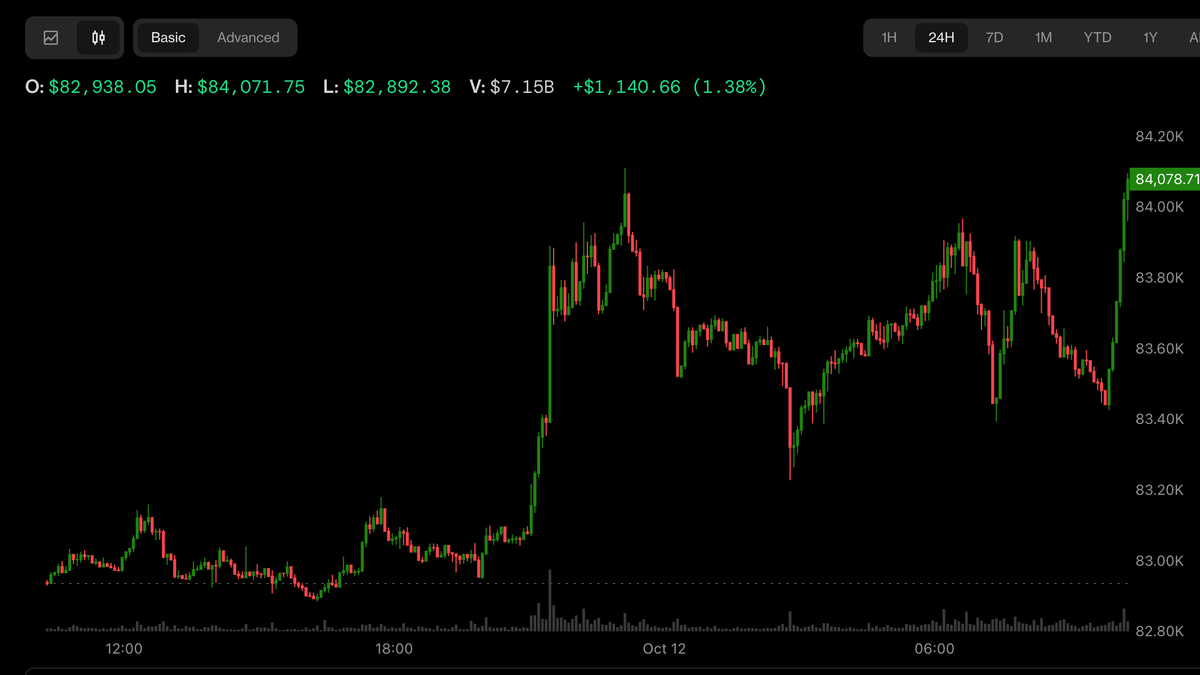
  1. Bitcoin holds $84,000 despite $600M ETF outflows, a third below peak

    Bitcoin traded above $84,000 as oil fell, even as US spot ETFs lost more than $600 million last week and have added only about $232 million over 13 sessions. Spot price resilience without institutional ETF demand means the rally is being carried by other buyers, and the gap to last year's high remains roughly one third.

    Bitcoin is holding on to its weekend gains as oil trades lower. ETFs lost over $600 million in outflows last week.

    2 more receipts

    US spot Bitcoin (BTC) exchange-traded funds (ETFs) have added only about $232 million over 13 sessions.

    One year after hitting an all-time high, bitcoin is trading about one-third lower, leading market watchers to question what comes next
cybersecurity

  1. Enterprises lack identity architecture for AI agents outnumbering staff

    Security practitioners say existing IAM platforms cannot issue verifiable identities, unleakable credentials or scoped permissions to AI agents, which many enterprises expect to outnumber humans several times over. Agent sprawl without governance means accumulated privileges and shared credentials become the next large attack surface, and no agreed standard exists yet.

    Enterprises are adding AI agents, applications, workloads, and machine identities far faster than they add employees.

    2 more receipts

    Every AI agent needs a verifiable identity, a credential it cannot leak, and a narrow set of permissions before it touches a production system

    There are many ideas, opinions and potential solutions, but no single agreed-upon approach for managing nonhuman online identities.

  2. XRP Ledger patched decade-old bug able to mint XRP from nothing

    CoinDesk reports the XRP Ledger fixed a bug present for roughly ten years that could have created billions of dollars of XRP out of thin air. A supply-integrity flaw surviving a decade in a top-tier chain undercuts assumptions about the maturity of long-running ledger codebases.

    XRP Ledger patched decade-old bug that could create billions of dollars in XRP from nothing

Why it matters

The Firmus collapse and the four-year bull market anniversary are the same story read from two ends: public markets have priced AI infrastructure richly for years, but at the IPO window investors are now demanding operating assets to match the valuation, not just Nvidia allocations and marquee customers. If that discipline spreads, the private neocloud and data-center financing chain that feeds Nvidia's order book faces a harder exit path.

In crypto, bitcoin's ability to hold $84,000 without ETF support says spot demand has broadened beyond the institutional wrapper, but it also means the flows that drove last year's high are absent. Meanwhile the identity problem for AI agents and the XRP Ledger bug are reminders that the security debt in both enterprise AI deployment and legacy chains is being discovered, not prevented.

What to watch

  • Whether Firmus closes a private round and at what valuation relative to the rejected $30 billion.
  • Whether US spot bitcoin ETF flows turn positive this week or outflows extend beyond the $600 million seen last week.
  • Court filings in the McDonald's antitrust case for any discovery into how the alleged pricing engine sets prices.

Sources read

SourceOutletPublished, UTCQuoted
Scrapped IPO of Nvidia-Backed Company Points to Limits of AI Boom wsj.com06:173×
How 3 Converging Waves (Not Just AI) are Transforming Clinical Data. clinicaltrialvanguard.com06:42read, not quoted
How Can We Manage Identity Access for AI Agents? govtech.com06:303×
One Zero lays off 25 employees in latest AI-driven efficiency push calcalistech.com06:152×
NEI Director Highlights Pediatric Advances, AI’s Promise in Eye Care ajmc.com03:15read, not quoted
Four Years In, $40 Trillion Up: Why This AI-Fueled Bull Market Has Room to Run barrons.com05:152×
AI may change the price of your Big Mac and groceries — what this means for shoppers cnbc.com02:153×
Foresight AI Brings Gremlin Agents to Reliability Engineering infoq.com06:29read, not quoted
Three Korean Deep-Tech Firms Seek Singapore Partners in October finance.yahoo.com02:15read, not quoted
Applications Open for Dimension X, Inviting Global Deep-Tech Startups to Tackle Singapore’s Public Safety Challenges einpresswire.com04:15read, not quoted
Don't see US acting against tech companies based on their domicile: TCS m.economictimes.com06:15read, not quoted
European tech weekly recap: €818M in deals and September's highlights tech.eu07:003×
Where are they now? Checking in with the Hot 25 Travel Startups for 2023 phocuswire.com05:15read, not quoted
1,000 Trillion K-GX: Startups Demand Market Over Funding chosun.com01:15read, not quoted
GM uses a polarizing ranking system to modernize workforce. Here's why detroitnews.com04:15read, not quoted
Abu Dhabi Enables Pre-Approval Tastings of Cultivated Meat & Precision-Fermented Foods greenqueen.com.hk05:15read, not quoted
Bitcoin shrugs off ETF outflows to trade above $84,000 as oil falls coindesk.com05:152×
Bitcoin ETF Inflows Stall After $1.7 Billion Burst: Will Demand Return? finance.yahoo.com04:151×
A Year On, Bitcoin Languishes a Third Below its All-Time High. What’s Next For The Cryptocurrency? wsj.com05:151×
XRP price at Oct 12, 2026 at 3am EDT Crypto Prediction Market robinhood.com06:15read, not quoted

AI Builder’s Edge

OpenAI's Codex CLI 0.162 and Claude Code 2.1.296 both landed workflow-level features this week: managed Git worktrees and Command Center task pinning on the Codex side, per-subagent model pinning and compaction controls on Claude's. The commercial backdrop is harsher: The Information reports Meta has halved internal Claude Code usage and Microsoft cut its projected Anthropic spend by more than a third, both in favour of in-house tools. Google's new Gemini workplace agent, with self-spawned sub-agents and persistent memory, widens the field further.

Sources read
5
Claims that stand
4
Quotes found in the source
10 of 10
Claims struck
0

We quote it or we drop it. Every claim below carries the source’s own words, checked against the text we read.

Each mark on a claim’s line is an outlet, placed by when it published: 07:16 to 22:16 UTC.

  1. Codex CLI 0.162 and Claude Code add worktrees, task pinning, subagent controls

    Codex CLI 0.162.0 shipped managed Git worktree tools, Command Center task pinning, a /copy command and a Windows CRLF patch fix, while Claude Code's latest release added a workflow-wide subagent model environment variable and per-subagent autoCompactWindow settings. Both vendors are converging on the same primitives for parallel, multi-agent coding, and the Claude fix for denied tool calls not ending a turn closes a real safety gap in managed hooks.

    Codex CLI 0.162.0 adds managed Git worktree tools for trusted local projects, task pinning inside the Command Center interface, a /copy command for transcript blocks

    2 more receipts

    introduced per-subagent autoCompactWindow settings, and fixed a managed-hook bug where a denied tool call did not end the agent’s turn

    made GPT-6.1 Sol the tool’s default model and added the ability to sign in to remote MCP servers directly from the terminal

  2. Meta halves internal Claude Code use, Microsoft slashes Anthropic spend

    The Information reports Meta's Claude Code user base fell from roughly 60,000 to 30,000 employees as its own Muse Code and MetaCode tools take over, and Microsoft cut a projected $1 billion-plus internal Anthropic spend by more than a third. Two of Anthropic's largest internal deployments are being displaced by first-party coding agents, though the report is explicit that customer-facing Claude spend through Microsoft is still growing.

    Usage of Anthropic's coding assistant, Claude Code, recently dropped to roughly 30,000 employees—down from approximately 60,000 earlier this year.

    2 more receipts

    In August, the company began external testing for Muse Code, a direct Claude Code competitor powered by Meta's models, which recently tallied over 6,000 internal users.

    Notably, this reduction applies exclusively to internal operations; customer spending on Anthropic models via Microsoft's enterprise platforms continues to see steady growth.

  3. Google launches Gemini universal agent that spawns sub-agents and keeps memory

    At Gemini at Work 2026, Google Cloud CEO Thomas Kurian unveiled a cloud-hosted Gemini agent that writes and runs code, creates media, plugs into Workspace, Slack and Microsoft 365, and can create temporary sub-agents that work over several days. Persistent memory plus self-spawned sub-agents puts Google directly against Codex and Claude Code's multi-agent workflows, and OpenAI and Meta already have competing assistants in market.

    Called Gemini, the AI is a "universal agent" that can write and run code, create images and media

    2 more receipts

    Gemini can create its own "sub-agents," which Google described as "temporary, job-specific agents, each with their own identity,"

    OpenAI followed suit late last month with the introduction of "Dots", an "AI helper" available to ChatGPT users with Pro and Business Premium accounts.

  4. Workflow hack: fixed character sheet keeps AI video faces consistent

    A HackerNoon creator running an AI-generated animated show describes locking character identity by generating the same reference sheet every time: three-quarter body shot, front, side and back views in a single outfit. Face drift across scenes is the main thing breaking episodic AI video, and a standardised multi-angle reference sheet is a cheap, repeatable fix builders can adopt immediately.

    I generate a character sheet for an AI-generated animated show I make the same way every time: three-quarter body shot, front, side, back, one outfit

Why it matters

The feature race between Codex CLI and Claude Code is now about orchestration rather than single-shot code generation: worktrees, task pinning, per-subagent models and compaction windows are the knobs you need once you run several agents at once. Google's Gemini agent arriving with self-spawned sub-agents and cross-session memory confirms that this is the product category every major vendor is now building toward.

The Meta and Microsoft pullback is the first hard evidence that hyperscalers will build rather than buy once their own models are good enough, which matters for anyone betting their stack on a single vendor. Anthropic's external enterprise channel is still growing, so this is a loss of marquee internal users rather than a collapse, but it signals that the coding-agent market will fragment along platform lines.

What to watch

  • Whether Microsoft's reduced internal Anthropic budget shows up in further headcount or usage cuts, and whether Meta ships Muse Code externally beyond the 6,000-user test.
  • How Claude Code and Codex respond to Gemini's cross-session memory and multi-day sub-agents, which neither CLI currently advertises.
  • Adoption of the per-subagent model pinning and autoCompactWindow settings in real workflows, and whether they reduce the runaway-context costs builders complain about.

Know someone watching this? Pass it on.

20 sources, at least 18 minutes of reading. This briefing took about 3. You’re done.

Counted from the 8 articles we could read in full, at 230 words a minute; 12 more sat behind a paywall or gave us only a headline.